Commercial HVAC & Building Systems
License BioNAV technology for integration into HVAC equipment and building monitoring systems. Real-time particle identification can inform indoor air monitoring and ventilation decisions.
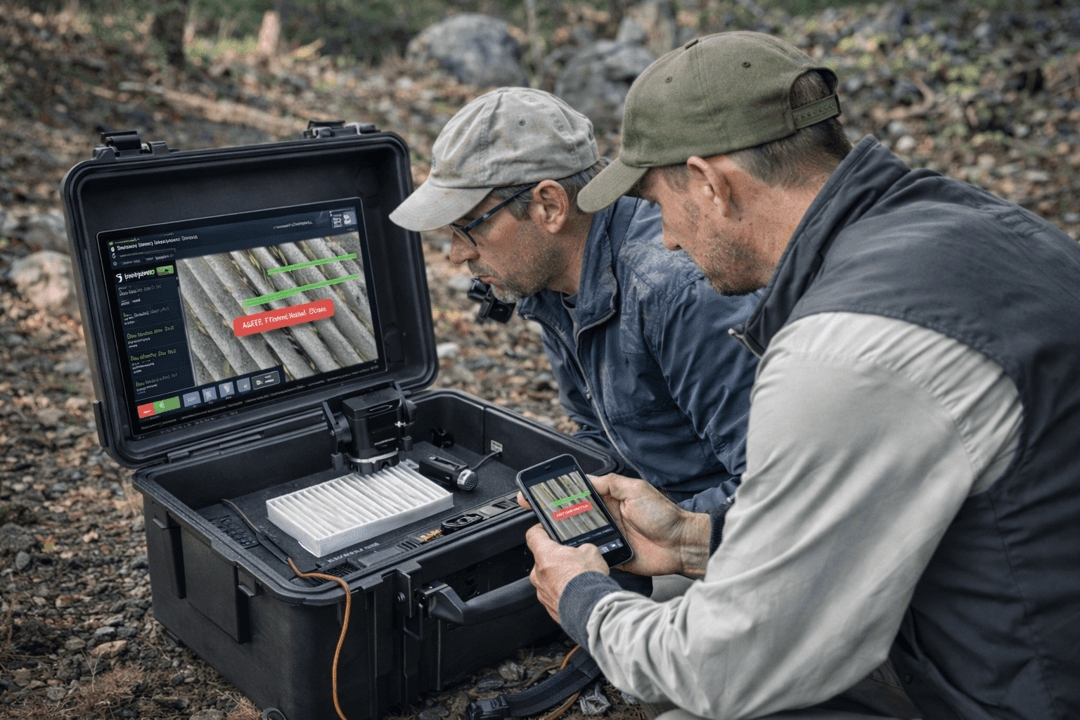
Computer vision and AI/ML for particle identification on filtration media. A licensing foundation for manufacturers and systems integrators.
THE TECHNOLOGY
Air Particle ID connects filter imaging with computer vision and AI/ML analysis. Identification capability depends on application-specific validation.
Capture debris on filtration media.
Analyze observed patterns using imaging and computer vision.
Validate identified results before connecting them to defined actions.
Filter imaging + computer vision · Integration concept illustration
Define your application before discussing a license. Engineers and systems integrators can use this preview to identify the industry, imaging approach, and integration requirements.
1. Select your industry sector.
2. Identify candidate imaging technologies.
3. Review project variables with BioNAV.
The planned scoping API is separate from device telemetry and license verification.
Configure your application
Choose your industry and build a draft on the Discovery Studio page. Optional application, sensor, and enterprise fields are available there.